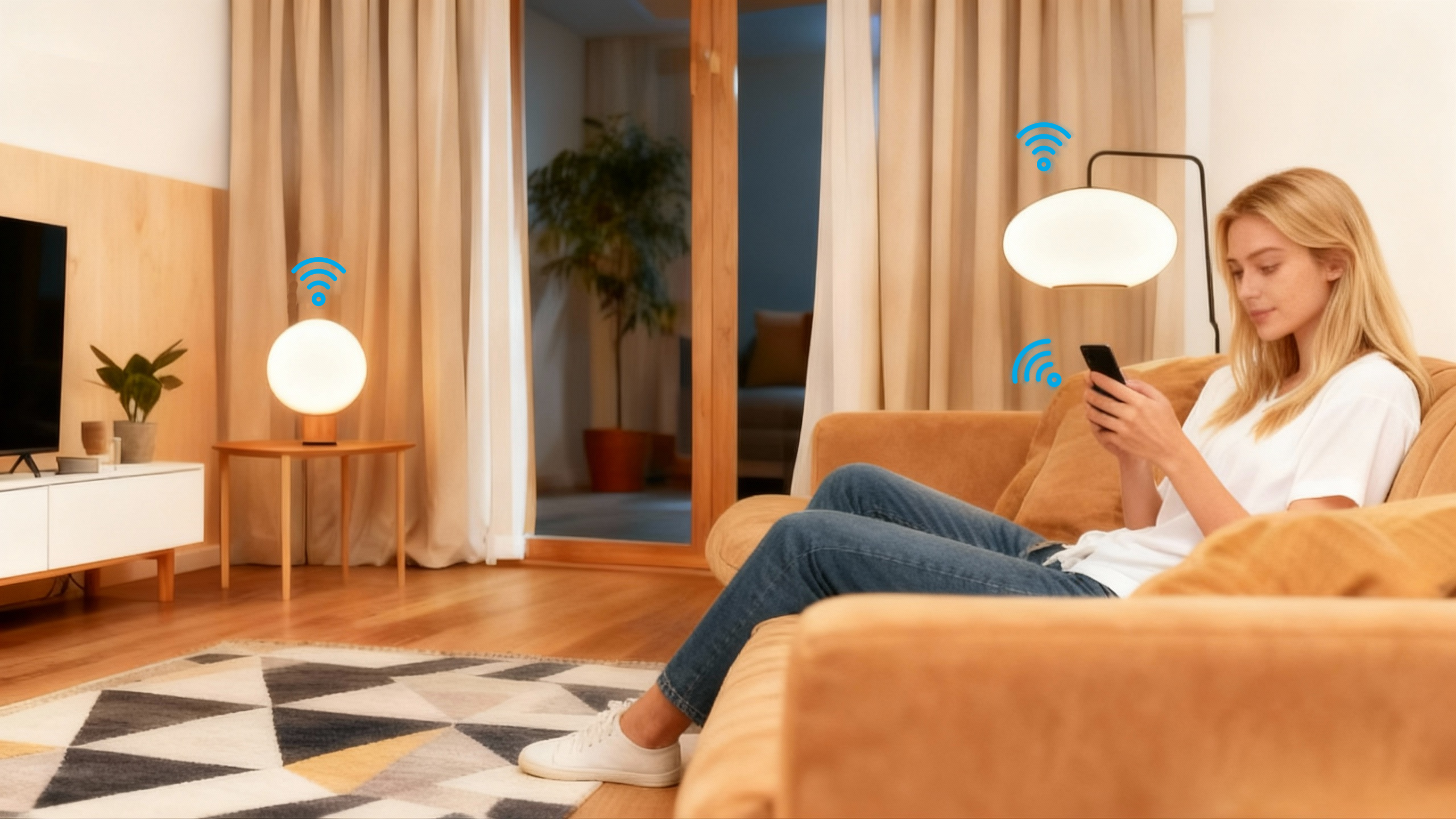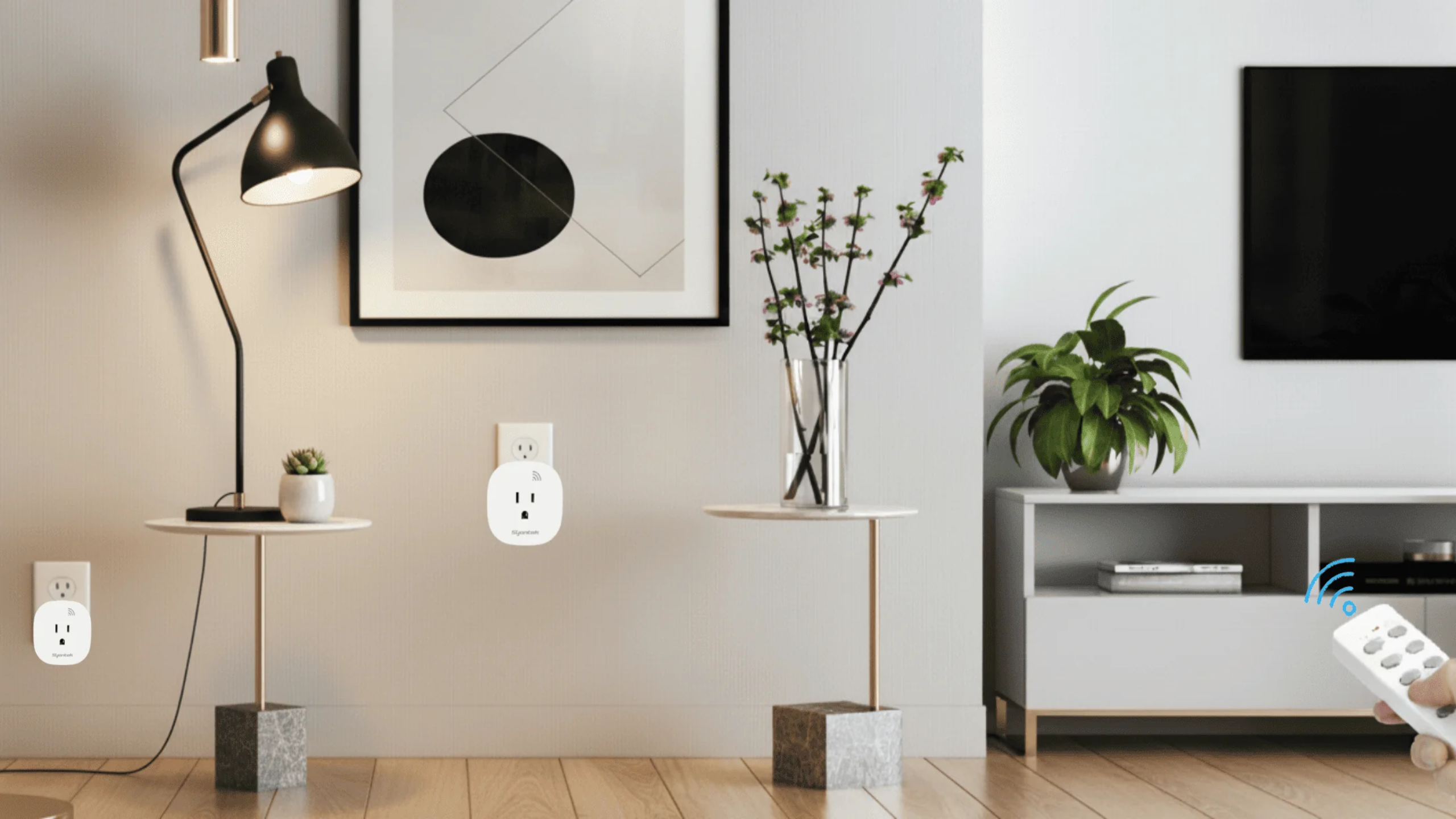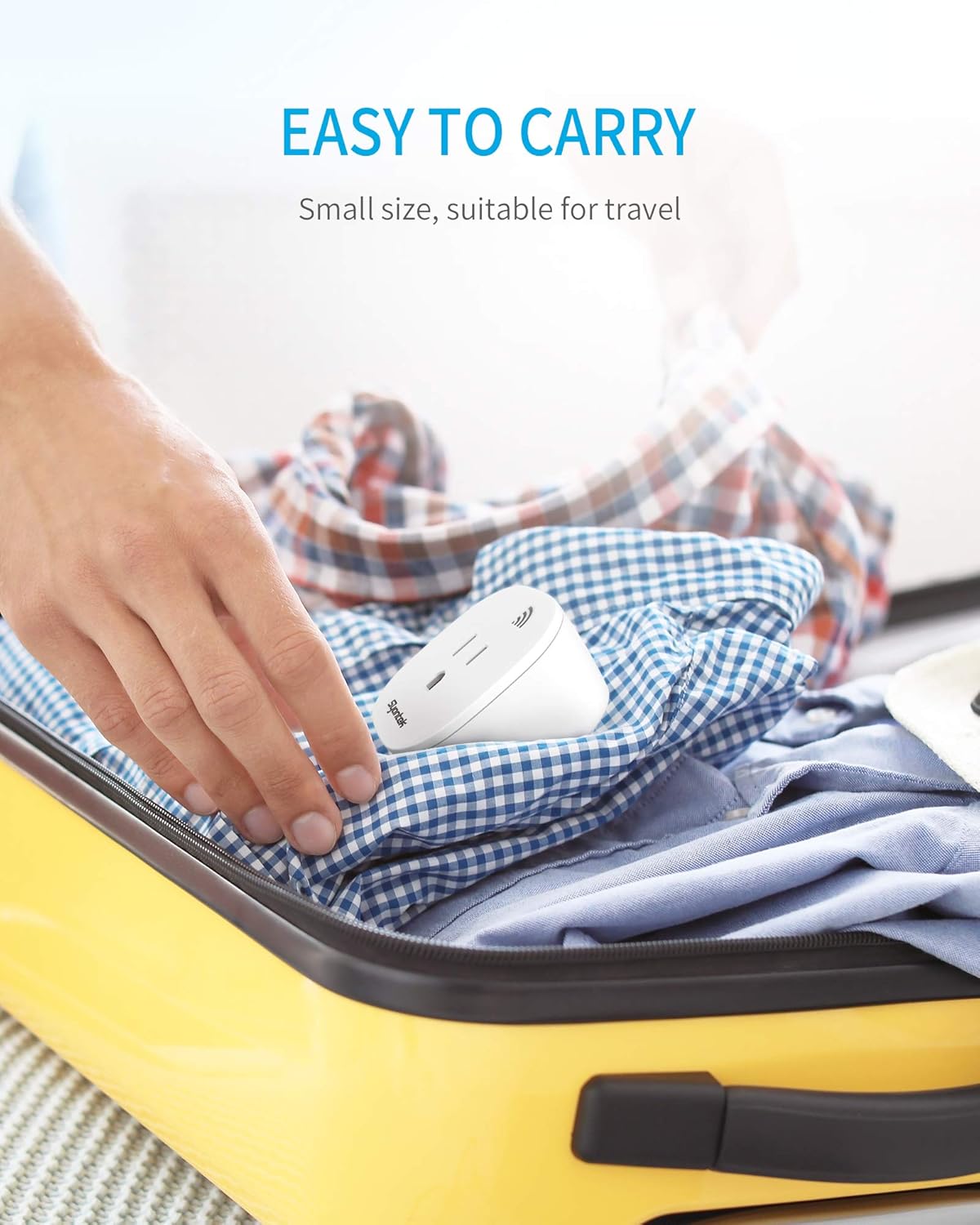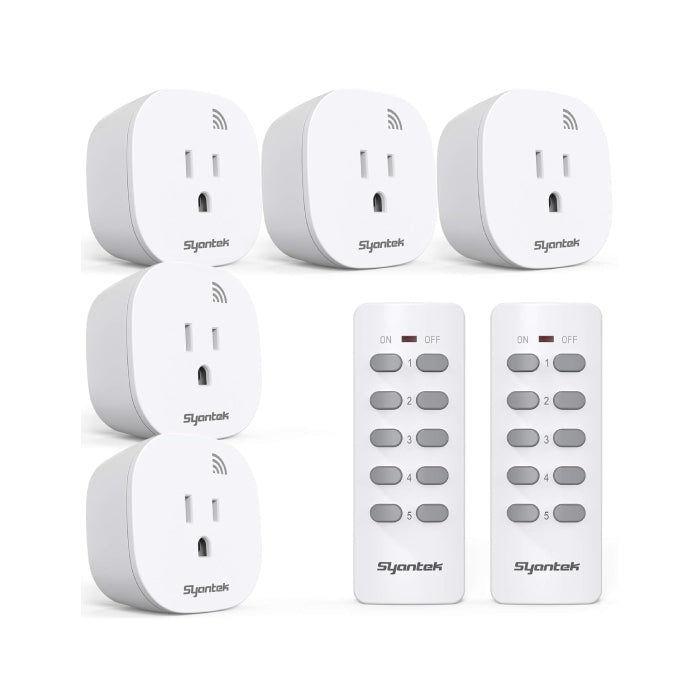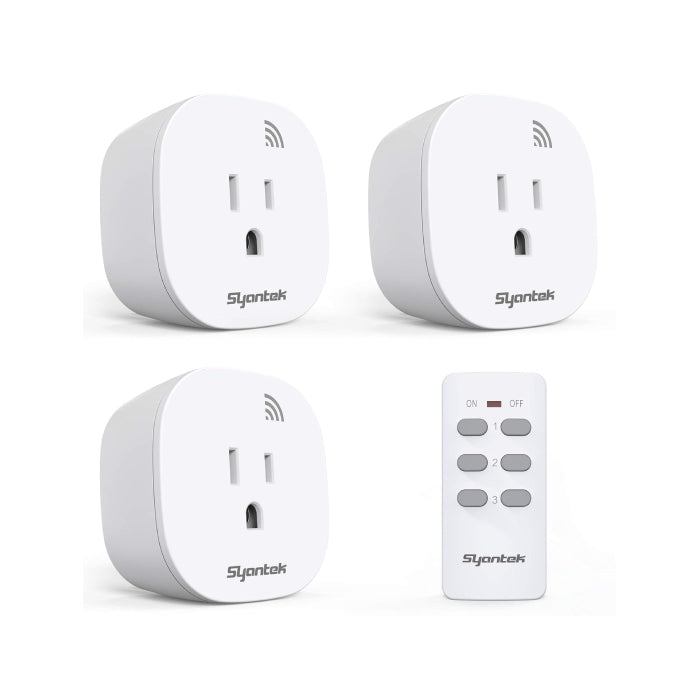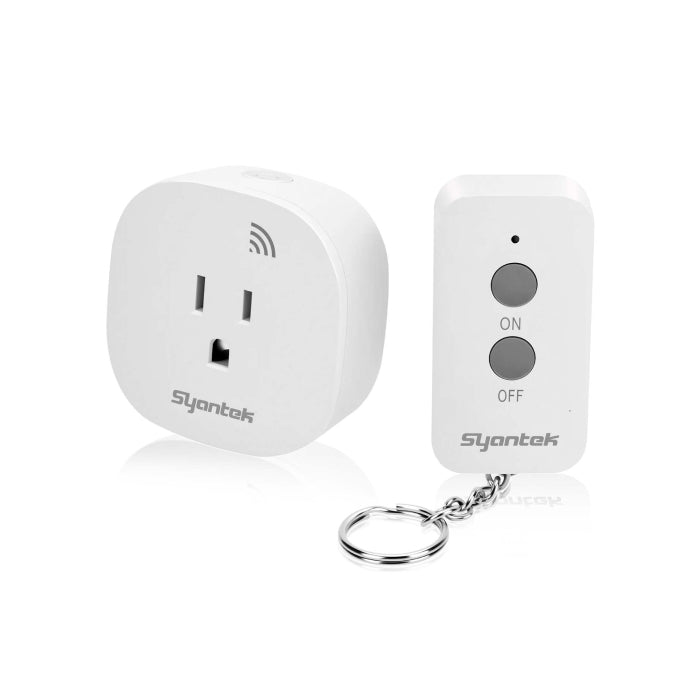
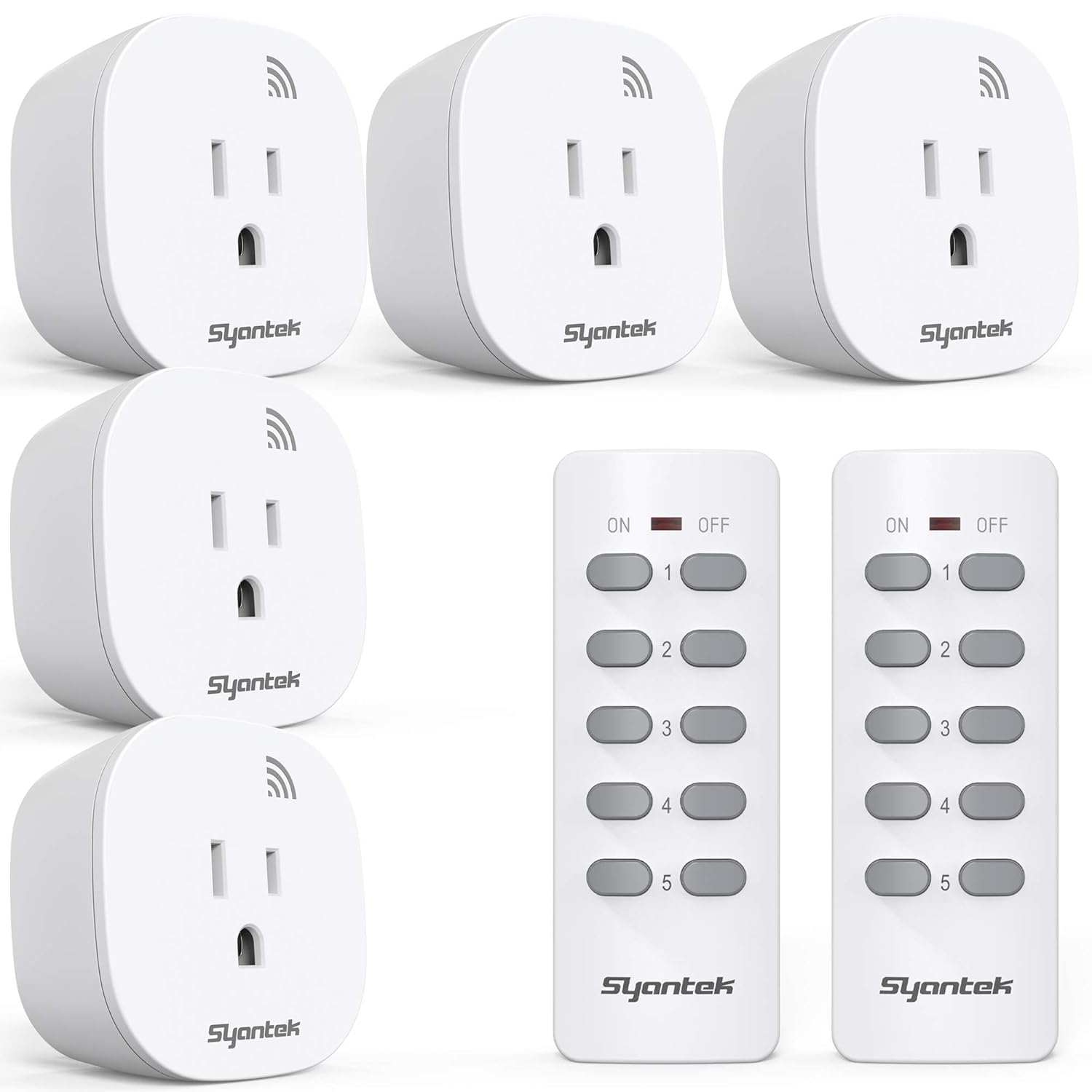
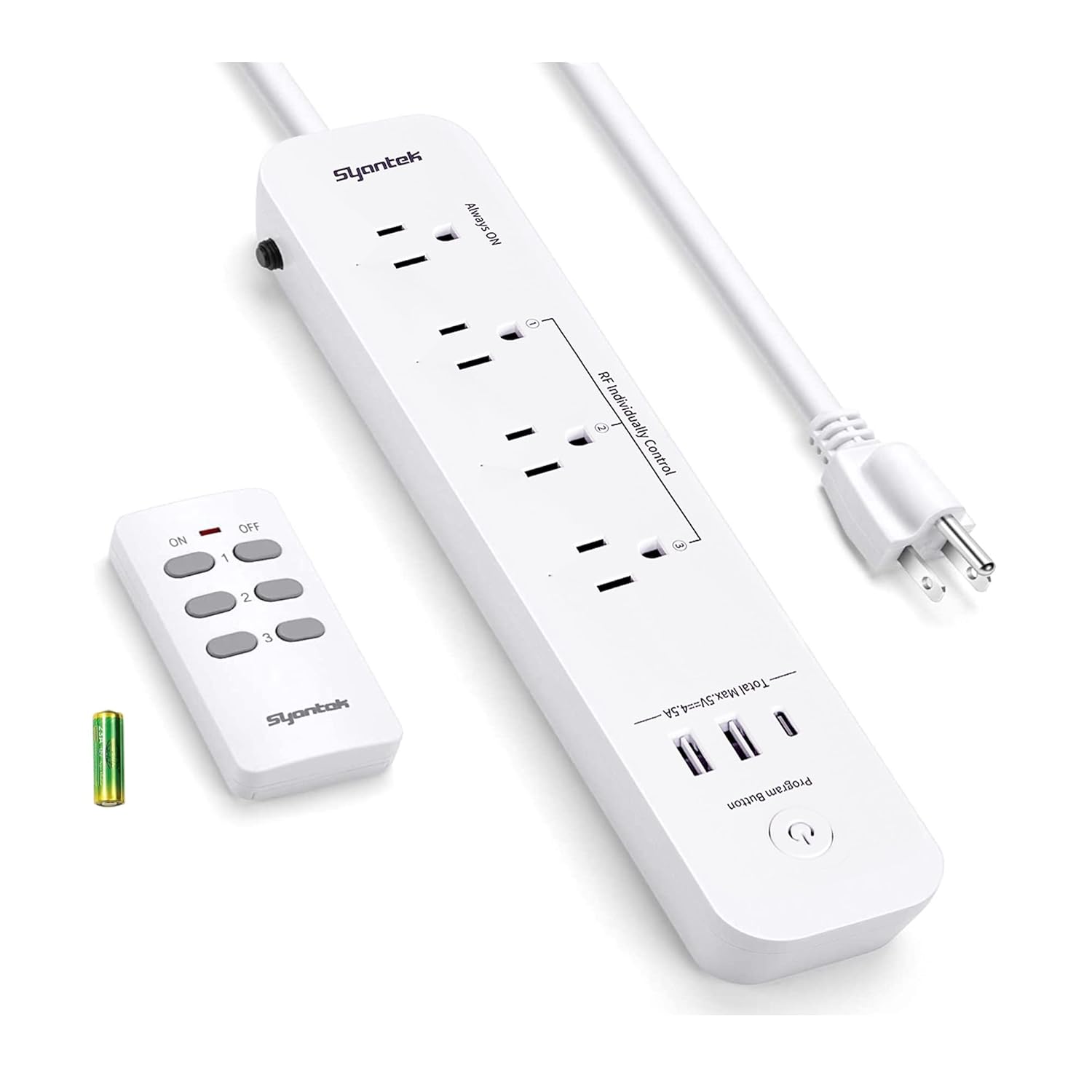
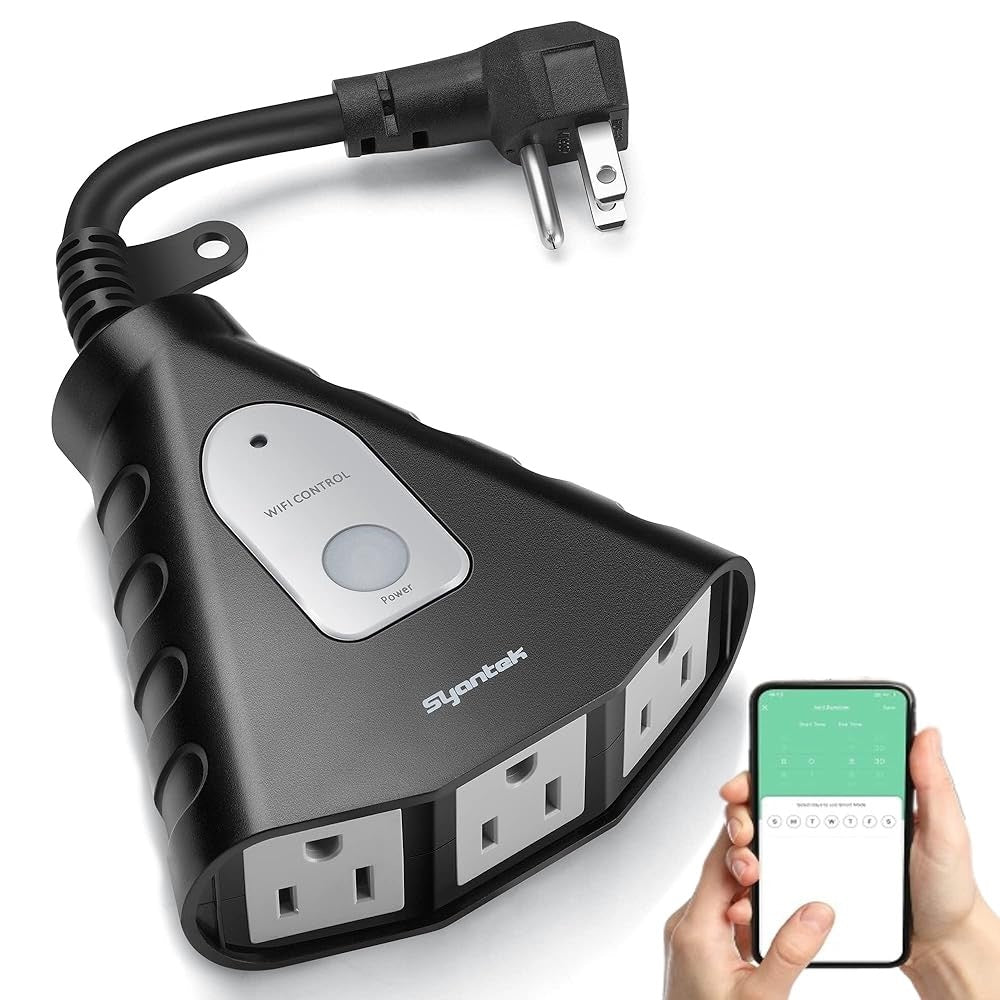
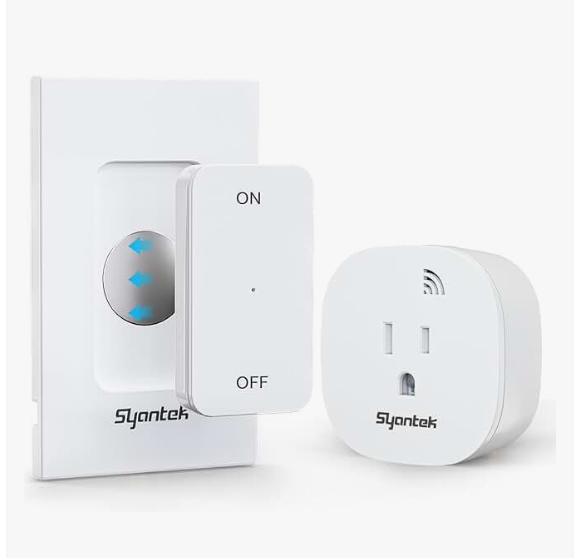

From powering Christmas string lights and garden decorations to controlling patio fountains and indoor lamps, U.S. households often need a seamless way to manage multiple appliances without stepping outside or crouching near outlets. The ideal solution should offer reliable long-range control, require no complex setup, work consistently both indoors and outdoors, and remain intuitive for every family member to use—whether tech-savvy or not.
However, when comparing WiFi smart plugs, Bluetooth outlets, voice-controlled sockets, and RF remote control outlets, many users become uncertain. While all options claim to enable “remote” operation, their day-to-day performance and practicality can differ significantly depending on real-life usage scenarios.

Which Control Type Really Works Best in Real Life?
While WiFi plugs, Bluetooth outlets, voice-controlled sockets, and RF remote control outlets all promise “remote” operation, their control mechanisms, usability, reliability, and environmental requirements differ dramatically in real-world scenarios.
|
Control Type |
How It Works (Control Principle) |
Common Issues |
Risks & Limitations |
Typical User Feedback |
|
WiFi Plug |
Connects to a 2.4GHz home WiFi network and communicates with a cloud server or mobile app |
Requires complex pairing; must reconfigure when router changes; easily disconnected in weak-signal areas |
Completely dependent on internet and server uptime — no WiFi = no control |
“Our WiFi went offline during the holidays, and we couldn’t switch off the outdoor lights.” |
|
Bluetooth Outlet |
Uses short-range Bluetooth (typically 10–30 feet) for direct device-to-phone communication |
Limited range; poor wall penetration; signal interruption outdoors |
Only works within close proximity; not suitable for multi-room or outdoor control |
“I have to stand right next to the window just to connect from inside.” |
|
Voice-Controlled Plug |
Commands are sent via Alexa, Google Home, or Siri and processed through cloud-based voice recognition |
Requires additional smart hub and internet connectivity; voice interpretation may fail |
Not user-friendly for kids or elderly; fails during internet outages |
“When the internet went down, Alexa couldn’t control anything.” |
|
RF Remote Control Outlet (433 MHz) |
Uses pre-programmed radio frequency signals (typically 433 MHz) to send ON/OFF commands directly to the outlet |
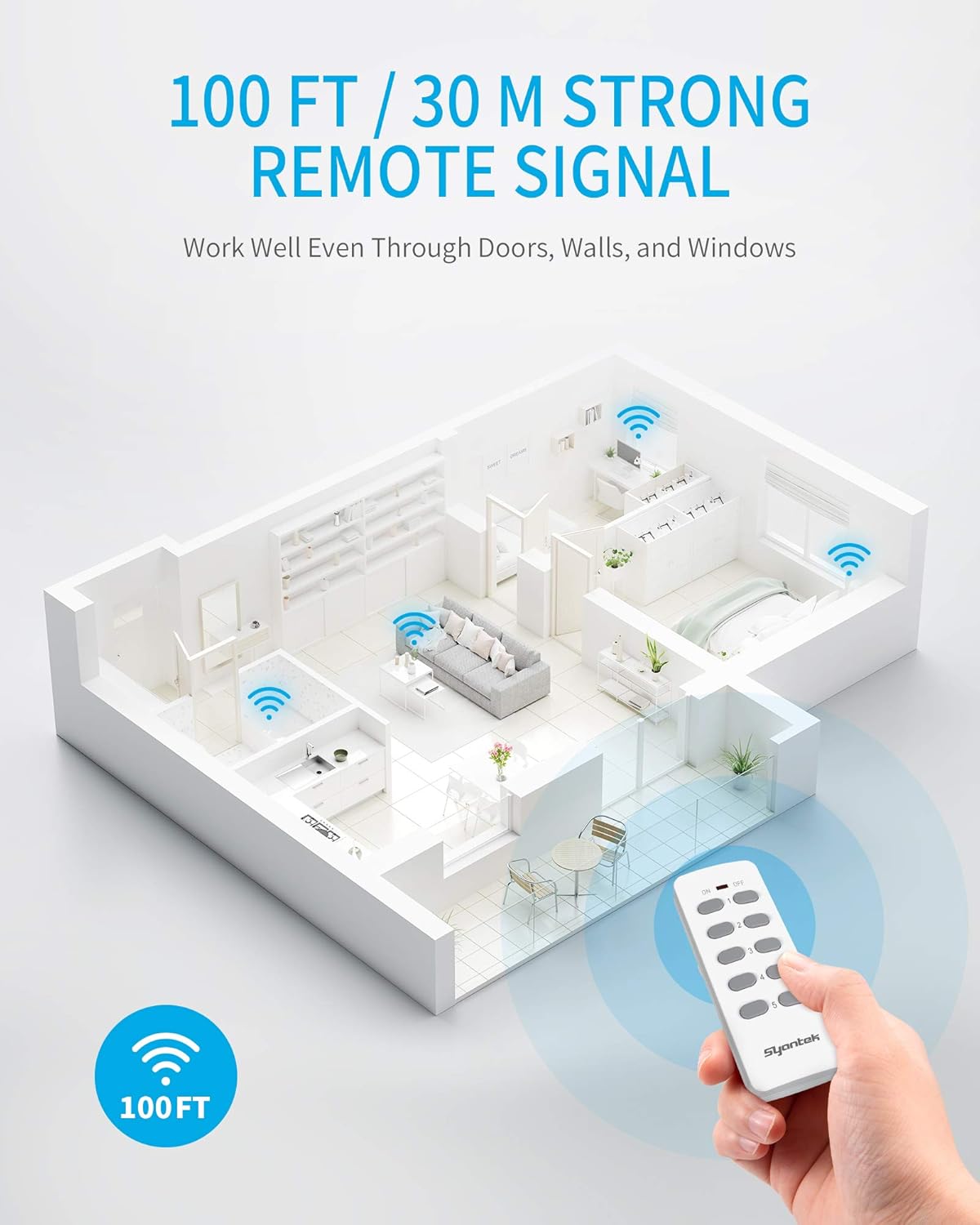
No app setup needed; strong wall penetration; responsive over 100 ft |
Very low failure rate; not affected by internet or phone battery |
“One button press from the living room controls my backyard lights instantly.” |
WiFi plugs rely heavily on 2.4GHz wireless connections and remote server communication, meaning their performance depends on network stability and app functionality. Bluetooth outlets operate on point-to-point transmission within limited ranges, often affected by wall thickness or outdoor interference. Voice-controlled plugs require additional smart assistant devices and cloud-based voice parsing, which creates extra barriers for children, seniors, or non-tech users. In contrast, RF remote control outlets operate on 433MHz low-frequency radio waves with superior penetration, low latency, and zero reliance on network environments—making them ideal for yards, garages, patios, and seasonal outdoor displays.
How Each Control Method Performs in Everyday Family Use
To better understand how each control method truly performs in daily life, let’s look at some of the most common household scenarios in the U.S.—from holiday decor to evening convenience. While all four options may appear to offer “remote control,” their real-world usability, reliability, and ease of access vary significantly when placed in typical home situations.
The following comparison illustrates how WiFi plugs, Bluetooth outlets, voice-controlled sockets, and RF remote control outlets behave in practical everyday use:
|
Scenario |
WiFi Plug |
Bluetooth Outlet |
Voice-Controlled Plug |
RF Remote Control Outlet (433 MHz) |
|
Christmas Decorations |
Requires stable home WiFi; network congestion during gatherings may cause loss of control |
Limited range; user must be close to the device or near a window to connect |
Requires Alexa/Google Assistant; fails if internet or voice recognition is unstable |
No internet needed; one press from indoors can instantly control outdoor lights |
|
Garden Fountain & Outdoor Lighting |
Easily disconnects in weak outdoor WiFi zones |
Bluetooth range drops significantly outdoors; poor wall penetration |
Must be within range of a voice assistant, which may not be positioned outdoors |
RF signal penetrates walls and works reliably over 100+ feet, ideal for yards and patios |
|
Elderly Parents Using the Outlet |
Requires mobile app navigation, which may be difficult for older adults |
Still requires pairing and connection within a mobile app |
Voice recognition may struggle with unclear pronunciation or accents |
Simple button press on a handheld remote; intuitive and familiar for seniors |
|
Turning Off Lights from Bed or Couch |
Requires opening an app; may not work if WiFi drops at night |
Must move closer to the outlet before signal connects |
May fail if the room is noisy or the assistant misinterprets the command |
Can easily switch off appliances from the couch or bed within seconds |
|
Controlling Multiple Devices at Once |
Requires toggling each device individually in the app |
Must connect to each outlet separately |
Voice commands must be repeated for each device |
A single remote button can control multiple outlets simultaneously—ideal for holidays or party setups |
|
Extreme Weather or WiFi Outages |
Fails entirely when WiFi is offline |
Bluetooth may destabilize in cold or open outdoor areas |
Cannot operate without internet connectivity |
RF remains unaffected by network status or weather conditions, making it reliable during emergencies or stormy weather |
As shown above, WiFi, Bluetooth, and voice-based systems often struggle when faced with weak internet coverage, limited range, setup complexity, or dependence on external devices such as smart speakers. In contrast, RF remote control outlets excel in simplicity, responsiveness, and stability—offering a more dependable and user-friendly experience for families of all ages.
Key Factors to Consider When Buying a Remote Control Outlet
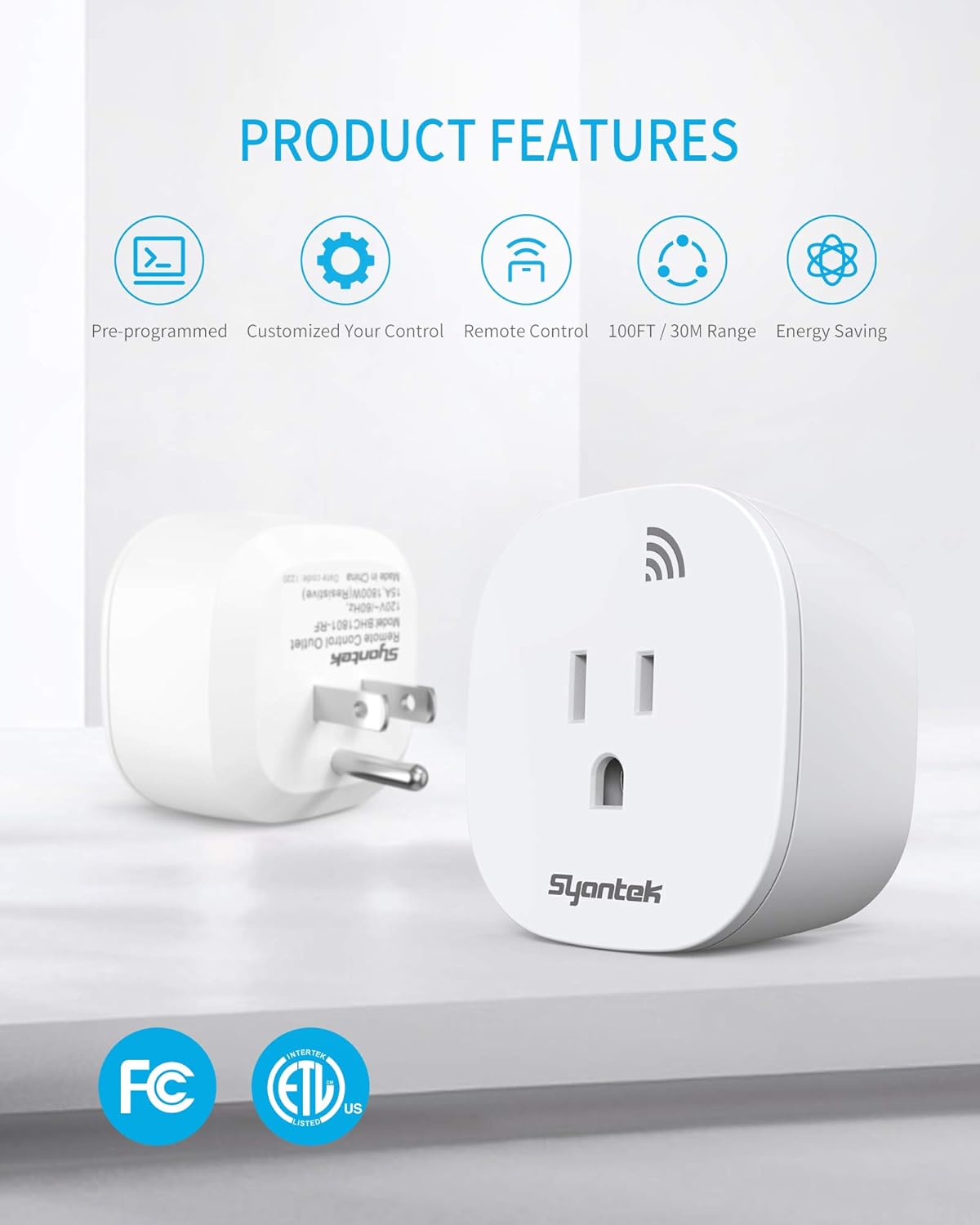
When choosing a reliable remote control outlet, look for models that offer at least a 100-foot RF control range, provide multiple sockets (ideally three or more), with an IP44 or higher rating for outdoor durability. Safety certification is also crucial—ETL or FCC listings ensure the product meets industry compliance standards. For added convenience, opt for outlets that come factory pre-paired, allowing for instant plug-and-play use without any setup. In practical use, it’s helpful to group outdoor lights under a single remote button for synchronized control and label the remote keys clearly so every family member can easily identify which button corresponds to each appliance.
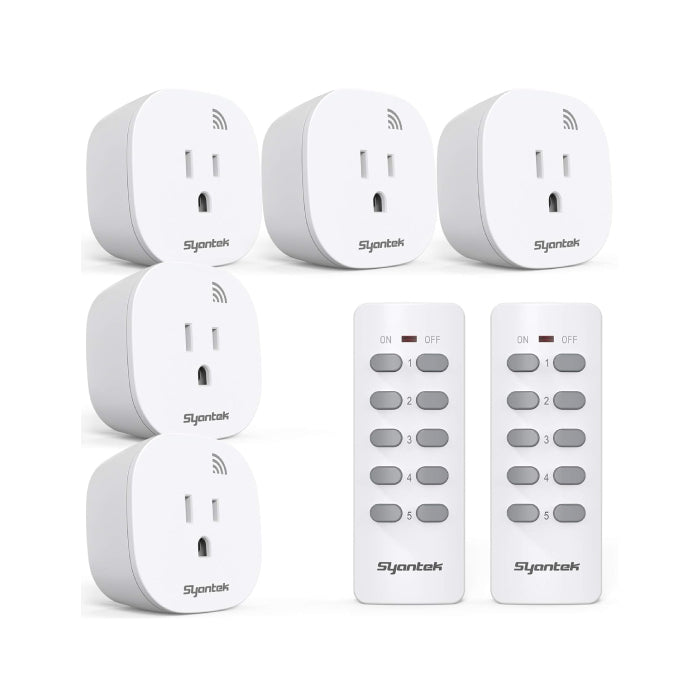
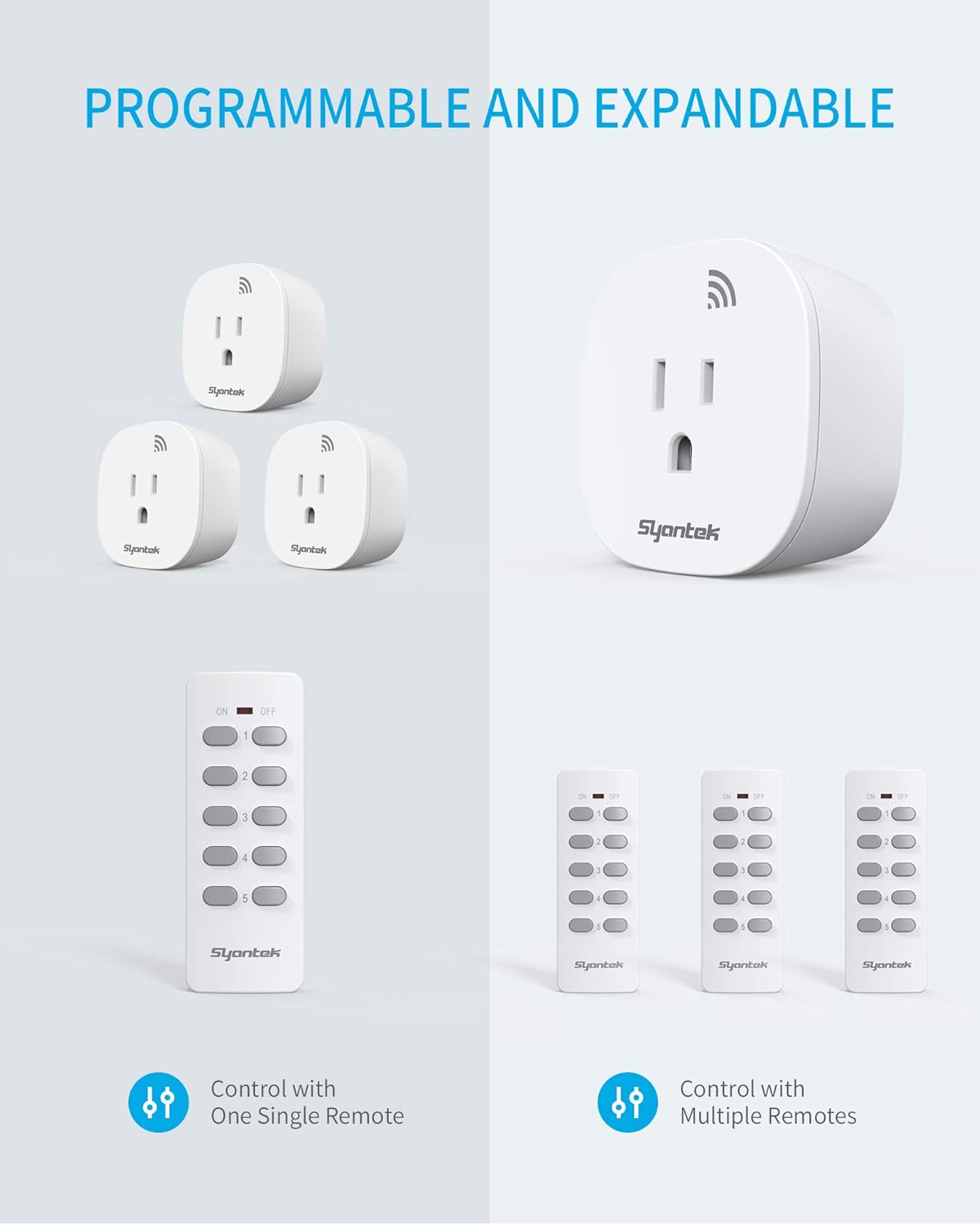
If you’d like to explore one of our best-selling models, check out our Remote Control Outlet here: Syantek Remote Control Outlet.
FAQS:
Q1: Is a remote control outlet more reliable than a WiFi plug?
A: Yes. It doesn’t rely on internet access and works flawlessly outdoors or during network outages.
Q2: Can RF remote outlets penetrate walls?
A: Most use 433MHz RF signals, which offer excellent range and wall penetration.
Q3: What if I lose the remote?
A: Some models allow pairing with replacement remotes.
Q4: What appliances can I use with it?
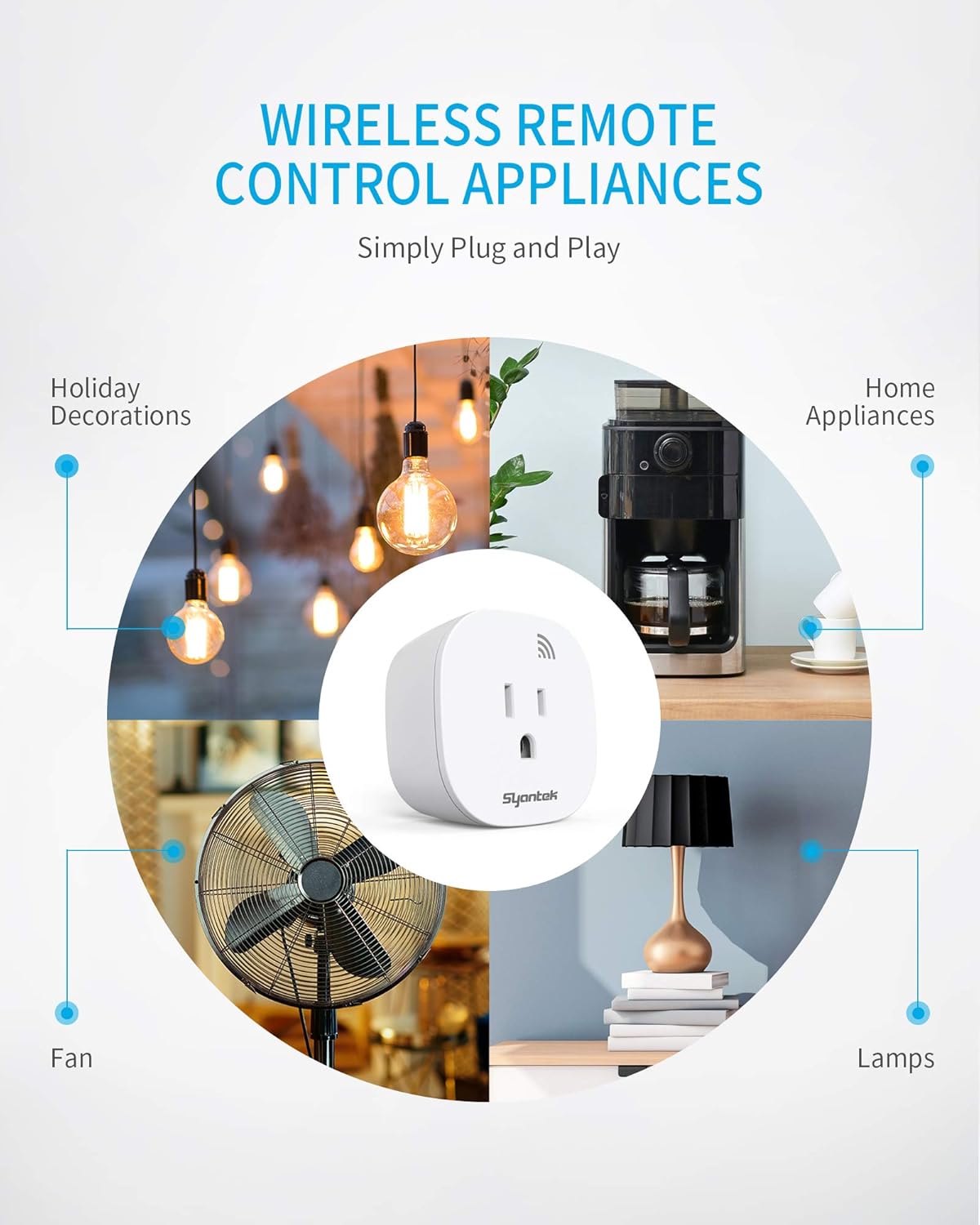
A: Perfect for garden lights, LED strings, fountains, fans, heaters, and seasonal décor.
Q5: Is it suitable for seniors and kids?
A: Yes, it requires no apps, accounts, or voice assistants—just press a button.